Wednesday, October 28, 2009

10/13/09 ? I am losing track of the days...


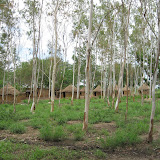
Today I woke up after dreams of lying in Central Park listening to Belle and Sebastian with Gabby, a Starbucks white mocha frappaccino in hand. I was shocked to find myself under a mosquito net and a straw roof, listening to the donkeys morning wheeze. And there is no jarring sound like the donkeys first sounds in the morning - raggedly sucking in air in a tension filled shudder, and as soon as it seems like the poor malnourished beast's lungs have collapsed, it haws out a shrill choked exhale. Most of the day was spent in my usual way: mornings in the health center weighing babies, afternoon tea with the CSCOM staff, cooking lunch and studying Bambara as a crowd of aimless children stare at me, the evening tea and chat sessions followed by dinner with my host family. Still, I felt I was looking at my village through raw eyes, everything highlighted by the vibrant blue and yellow outlines that my anti-malaria medication fabricates. This is where I live? These are my neighbors, my friends, my co-workers? These straw huts with the swirling squash and cucumber vines - this is my home? What a strange, beautiful, simple world to be living in, so unlike the crisp, metallic New York! Even though the people asking me for money piss me off, the children laughing at my terrible Bambara is exasperating, and I haven't quite figured out how to successfully carry my water buckets on my head without getting soaking wet, its wonderful to live so intimately in this village. And despite the frequent loneliness that comes with being an outsider, and my (daily) efforts to get the children away who constantly swarm to my house (which is facing the school), I am amazed at how much I've integrated into the community in a month.

One thing I've been doing alot of is baby weighings at the CSCOM. During vaccination days on Mondays, women of the surrounding villages come, and I've tried to take this opportunity to weigh the 30+ babies there. In addition, almost daily children come to the CSCOM, for whatever reason, who are obviously malnourished. I've found that about 8 out of 10 children I've weighed are malnourished, either moderately or severely. Plumpy Nut, an ameliorated peanut butter distributed by UNICEF, has been a really helpful way to ensure that they are getting their daily protien and vitamin quota, which is so lacking in the typical Malian diet of rice and millet. But the French charts and guidelines are contradictory and confusing to me, and even more so to the other healthcare workers who seem to arbitrarily prescribe the peanut butter and make unconfident suggestions to the clueless parents. There is definitely something to the argument that literature and funding is great in terms of aid to developing countries, but taking the time to actually train the health workers in the rural villages is desperately needed, and inherently more sustainable than throwing money at a problem.

Saturday, October 17, 2009

Where There is No Gynecologist

Preventing cervical cancer in low resource settings
By Dina Carlin

"Women are not dying because of diseases we cannot treat...they are dying because societies have yet to make the decision that their lives are worth saving."
-Dr. Mahmoud Fathalla, former president of the International Federation of Gynecology and Obstetrics

In a country where female reproductive health is barely on the agenda, cervical cancer is an example of how modern medicine has stopped short in Mali, largely due to the low availability of resources. Each year there are 500,000 new cases of cervical cancer worldwide, and more than 80% of these cases occur in developing countries (1). According to the World Health Organization, cervical cancer is the most frequent cancer developed in Malian women, with 1,336 new cases each year. Meanwhile, 1,076 cases of cervical cancer in Mali each year result in death. These figures are projected to double in the next 15 years (2). While these statistics are sobering, cervical cancer happens to be one of the most preventable cancers with even infrequent screening. A household condiment, it seems, may be the answer.
The development of cervical cancer, caused by certain strains of the sexually transmitted virus HPV (the Human Papiloma Virus), has been strongly linked to socio-economic status. The increased prevalence of HPV in developing countries, as compared to rates in developed nations, is linked to a comprehensive list of factors, including access to sexual education, age of first sexual intercourse (25% of Malian women have sex before the age of 15), and availability of medical resources. However, the high incidence of cervical cancer is in large due to the lack of access to preventative healthcare. It is estimated that 21.5% of women in West Africa are infected with HPV, and this number has been climbing. In developed countries with fluid, accessible medical technology, the 'Pap' smear, a standard part of a gynecological exam, followed by colposcopy (laboratory analysis of cervical tissue) are well established methods to screen for HPV and precancerous cells. In addition, a vaccine that prevents two strains of HPV most frequently associated with cervical cancer has recently become widely available, albeit expensive. These efforts have led to sharp decreases in cervical cancer worldwide, with the exception of Sub-Saharan Africa. The high cost of these procedures, untrained and inexperienced healthcare providers, and the need for follow-up treatment create obvious barriers for impoverished countries such as Mali.
New procedures for diagnosing cervical cancer have been founded on the need for inexpensive screening methods that require minimal training and single visits to the health center. Since cervical cancer generally develops slowly, screening every 3-5 years, sources say, can have a significant impact in reducing mortality (3). While not as effective as the Pap smear, and certainly not as empirical as cytology, VIA, or visual inspection of the cervix with acetic acid (also known as household vinegar) is a groundbreaking alternative for the developing world. An alternative is VILA, visual inspection with Lugol's iodine, which is a slightly more expensive alternative. It involves only spraying the vinegar or iodine on the cervix, where the precancerous cells turn white in the case of vinegar, or brown with iodine. The simplicity of this procedure involves almost no equipment other than vinegar (widely available in most butigis) or iodine, and can be administered by any health worker.
Treatment for cervical cancer is key, as 95% of cases become fatal within two years. While treatment options vary, one of the cheapest, easiest and quickest treatments for cervical cancer is cytology, which involves "freezing" the cervix using carbon dioxide or nitrogen dioxide, killing off the precancerous cells. Most of the materials are locally available, the training is minimal, and the 15 minute procedure can be carried out by non-clinicians such as Matrons. In addition, it has a very low rate of complications, with cure rates of 85-91% (1).
So what do we do now? Since sustainability is key, working towards training healthcare workers such as Matrones to screen and treat cancer would decrease the impact of this highly destructive cancer. Finally, education and screening initiatives, with the aid of NGOs such as Prevent International Cervical Cancer Now (www.pincc.org) or the Alliance for Cervical Cancer Prevention would help bring the issue of cervical cancer to the national spotlight. Turning to simple and accessible technologies such as VIA and cryotherapy can create the foundation for effective preventative care in reproductive medicine. With all the tools available here in Mali to fight cervical cancer, it is time to decide to take action.


1 Sanghvi H., Lacoste M and McCormick M (eds). (2006). Preventing Cercical Cancer in Low-Resources Settings: From Research to Practice. Report of a conference in Bangkok, Thialand, 4-7 December 2005. JHPIGO: Baltimore, Maryland.
2 WHO/ICO Information Centre on HPV and Cervical Cancer (HPV Information Centre). (2009). Human Papillomavirus and Related Cancers in Mali: Summary Report 2009. [Accessed October 2, 2009]. Available at www. who. int/ hpvcentre
3 Sankaranarayanan,R.,Budukh, A. M. and Rajkumar, R. (2001). Effective screening programmes for cervical cancer in low- and middle-income developing countries. Bulletin of the World Health Organization. WHO.

Wednesday, September 30, 2009

En Brusse

Well, my first two weeks at my village have gone by, and I know this will be so much more challenging than I realized, and so full of beauty, friendship and rewards. I am already losing track of the days in this web of the Brusse. Sometimes it feels like I can turn my head in so many directions and still find myself plastered to the same spot; the same children with the same illnesses, the same sanitation deficiencies and the same lack of expectations. The language of simplicity though, while from an outside view is banal, creates such complex layers of relationships. They use charcoal fires in lieu of covalent ovens, and gather around the shaky radio broadcast in the pitch black. And yet they are, as a whole, one of the most vibrant and happiest people I have known. It is cliche, but they have nothing but each other to care about.

Back here in Kita, the 9 of us met up to celebrate getting through the first hump of living off the grid. It is a relief in a way to speak english and feel comfortable in my American skin. It is sometimes difficult, at site, to remember that you are in fact capable of normal social interactions. There is no challenge to the ego like your 12 year old host sister asking you, day after day, if you washed. I gulp down the cynical urge to ask her how often she cleans herself (or just her hands) with soap - and anyway, sarcasim is a concept unsupported in the language here. Instead, I manage an agitated/amused giggle at my sister's strange brand of hospitality, pointing to my wet hair. At this point, I wouldn't be suprised if she asked me about my bowel movements. Privacy, personal space, alone time - these concepts dont quite register with Malians. Enthralled with the novelty of having a white person so intimately joining their space, I have found that the one time I can acutally be alone is locked in my hut, drowning out their calls to me over my wood fence with my headphones. Each day, as hard as it is to leave the safety of my cool mud walls and wonderful english books, I push myself out to wander about - yalayala - through the snakelike paths around the fields and huts, stopping here and there to have tea with the breadmakers, joke with the boutigi owners about taking them back to America with me, or draw animals and portraits with the children. Right now, the feverent rainstorms has made my village overflow with vibrant green fields, and the plants literally sprout out overnight and have drowned the "path" to my cell phone service spot: a little worn down clearing in the middle of the cornfields.

The other day I saw my first natural birth. It seems that almost all deliveries here are made in the middle of the light, dramaticly lit by oil lamp. Of course it is because these women must wait till their husbands get home to get permission to go to the CSCOM, and the state of being 9 months pregnant does not excuse you from pounding millet, chopping wood and pulling water from the well. I remembered this girl from her pre-natal consultation last month. She had just turned 16. She looked petrified, her eyes as big as moons as she yalayala'd around the room, her amniotic fluid dripping down her leg. When she was dilated, the matrone jumped on a table behind her and began pushing down on her belly with all her might, as her mother and her sister, each with an infant strapped to their backs, held her legs open above a jagged plastic bedpan. She was completely silent through the hour long process, the only sign of her pain were her tears gathering in a puddle on the floor and one or two grunts. After my matrone pulled the baby out, she grabbed him by the feet and hit and shook him, yelling "Kuma!" (speak!), laying him down to clear his passageways and pump his chest. The baby was alive, but was almost as silent as his mother. She hardly seemed happy or suprised, as if this was all she had expected; and here it is. Today, talking about my experience with my friend Dave, he pointed out how distinct the difference is between their access to healthcare and ours. If any one of us PC volunteers have any medical issue that surpasses the normal gamlut of moderate bacterial and parasitic infections, we would be shipped straight to Washington, DC. Not even the best hospital in the whole country of Mali would be able to provide the adequate healthcare that we not only covet in the US but expect. Here, in brusse, this woman was lucky to have access to a health center where they clean their tools with bleach - most of the surrounding villages near me don't even have a maternity. The beauty of the 360 vision you gain from living in this village web is you can understand the problems here from so many levels, and try to find solutions that doesn't involve throwing money at them.

And more than anything, it is so incredibly challenging establishing my place in this village with this huge lanugage gap. Most of the people in the village speak a different minority lanugage than Bamabara, called Malinke, and it is frustrating having to be led around like a child. But, I have found that art is an amazing vehicle to teach, and out of my restlessness I painted a mural of the food groups at the CSCOM.

Overall it is great, and I am learning that Mali is a country of contradictions - happiness in simplicity and misery in deficiencies, love and happiness through family and community and imprisonment by it. And I am happy I am here to create even the smallest bit of moderation.

Wednesday, September 16, 2009

Swearing In

So as of Thursday I became an official Peace Corps Volunteer! After a greuling week of seminars at the training center and a very intimidating language exam (who knows how I passed...), we finally finished training. The swearing in ceremony was at the American Embassy, where we sat dripping in our Malian gear and pretended to understand the lovely French speech given by Madame Ambassador. The rest of the day was spent poolside at the American Club, where we got ready for our huge swearing in party. We all piled into a few clubs in Bamako (probably the most American thing about Mali), met up with tons of current PCVs, and were still roaring at 3am.
Right now I am in Kita, soaking up all the indoor plumbing, VHSs and market vegetables I can get before I plunge into my village. On Friday my sitemate Kristen and I will head to our nearby villages. While the thought of having to get by with my fractured Bamabara only with the only English speaker a few miles away is pretty frightening, I am so looking forward to finally making myself a home after living out of a suitcase for the past two months. Looking back on training, I am so struck by the unbelievable people I have met here -both PCVs and Malians - and am continually impressed by the immense value that volunteerism has in this country. Yes, it has been fun learning how to turn human urine into fertilizer, trekking to our boutigi for the occassional cold drink, and all crowding together to watch the occassional Flight of the Conchords off one of our laptops. But the dialouge I have had with so many volunteers and those who have worked with the Peace Corps had been one of such optimism. It is definitely energizing, and important to remember that even just sitting and having tea with my neighbors and comparing our cultures is progress. Dooni dooni (little by little...)!

Sunday, September 6, 2009

End of homestay

Today I said goodbye to my homestay family, possibly for good. Yesterday, we had a going away party outside my house as I donned the beautiful Malian dress my family gave me the night before. As much as I was burning to get away from the streets that flooded with rivers of sewage, smoldering trash piles and the incessant “Je-ne-ba!” (my Malian name) screams echoing wherever I went, it was surprisingly difficult to leave them. Amidst the chaos of bags and water filters this morning as all of us PCVs met at my concession for our pickup, I sat with my family as they told me how much they would miss me. Last night my brother Allou told me how I had “shown him the kindness of humanity,” and that he “now believes that people can work to do good.” He told me that he always thought of the white man as arrogant, violent and greedy, but that I have been an example of “true equality.” It was heartfelt and touching. This morning my mother Jeneba (my namesake) sat tearing – even with the few phrases I had strewn together in our sporadic conversations, we shared a wordless bond. My host sister Fatoumata hugged me as she ripped off all her jewelry and placed it on me, joking that I was going to take her adorable baby Abdul with me (I was tempted). I was really blown away by the openness and gratitude of these people who had bathed and fed me these past two months. This is truly a culture of endless, uncompromising affection. But I think when everyone is struggling to fill their babies bellies, there is no need for callous walls.

Baby weighing day

So, I have been here for almost two months, and I cannot believe how quickly training has whirled by. As scared and unprepared as I feel to go alone to my site, I am amazed at how much I can convey to my family, and I am slowly beginning to piece together their conversations. Theres nothing better than being able to joke, a key social factor here among the different ethnic groups. “I be sho dun!” – “You are a bean eater!” Somehow, still hilarious 7 times a day. (Yes, the fart joke has its rightful place here in Mali).
The other day we did a huge baby weighing session in my courtyard, the 6 of us working in an assembly line, taking down the names of the crowd of women, two of us weighing the babies, and three of us counseling the mothers on their babies growth progress. 2 ½ hours and 130 babies later we put the last squirming baby into the snowsuit like balance roped to a vegetable scale. We compared their weight to their age, and separated them into the healthy green zone, the moderately malnourished yellow zone, and the life threatening red zone. Much to our surprise (and dismay), about half of the babies ended up in the yellow zone, and we tried in our best Bambara to tell them that they needed to improve their child’s protein and vitamin intake, as “their strength is little.” Still, there were about ten in the red zone, tiny things with shrunken in bellies and absent expressions. Those who were severely malnourished we sent immediately to the health center and urged them to improve their babies nutrition now. We also urged all of the children’s mothers in the yellow and red zone to return the next morning, where we did a huge ameliorated porridge demonstration with about 60 women. We showed them how to add protein and fruit juices to increase the nutrition of their carbohydrate dominated diet. As much as we tried, we still felt the large disconnect between the mothers and ourselves.

Site Visit

This week I finally saw the village I will be living and working in for the next two years. We first stopped in Kita for a night, where the three current volunteers were waiting. We made a big Mexican dinner and wandered around the city for a bit, met all the officials and roamed through the market. The next day we climbed into a rickety blue van where we sat on rice sacks with about 20 other Malians (not to mention a few boys and hanging on the side and two goats on the roof). Slowly we plodded, as the tin roofed houses began to give way to straw covered huts, and soon those almost disappeared as we passed by rolling fields of mango trees and cornfields and wild African bush. Two hours later we arrived at our villages (not to mention the 20 minute tire change). My concession has two huts and a private gated area in between. Privacy is something I find I covet here, as everything is so communal even the concept of personal space is not quite understood. I met my coworkers at the health center and sat in on several prenatal consultations. It was shocking to see so many young women – 15, 17, 20 with a toddler on her hip – walking into the health center. It is difficult to detach myself from comparisons. At 22 I cherish my independence and the thought of a family seems far in the future. I wonder if these women find happiness in the communal family love that is so valued here. But I can’t help projecting my Western assumptions that a women deserves to do more than raise her 7+ children and live at the whim of her husband and his other wives. Or at least let them enjoy the last of her childhood!